Mathilde Garcia
École Supérieure d’Art et de Design de Saint-Étienne
IG @mathilde__garcia
Mathilde Garcia is a designer based in Saint-Étienne, who graduated from the École d’art et de design de Saint-Étienne in 2022. Her work explores the zones of tension in design history that have provoked debate or rejection. She is particularly interested in the decorative and its status, long marginalised in favour of function and modernist rationality. Working from objects with identifiable uses, she displaces their function to reveal their narrative dimension. A resident at the Ateliers des anciens beaux-arts de Saint-Étienne, she cofounded the ppdesigner collective in 2025, within which she develops curatorial projects.
Lignes de fuite
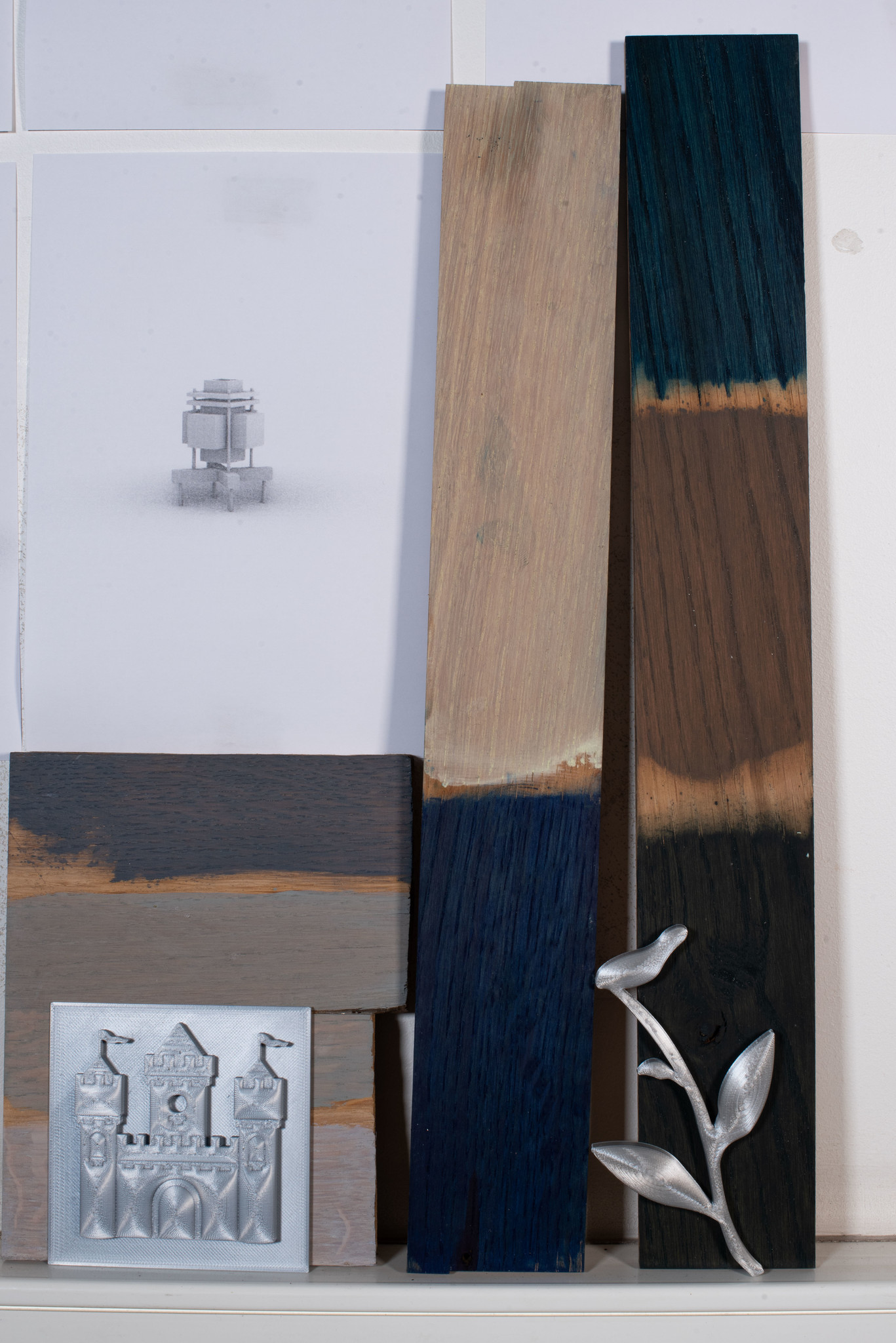
Lignes de fuite (Perspective Lines) is a series of seven objects centred on the tatus of the decorative within the field of contemporary design. Historically sidelined by modernism and associated with superfluous ornament and so-called feminine practices, the decorative is here reclaimed as a critical space in its own right; one that produces narrative and tension, and an increasingly necessary response to the standardisation of ultra-functionalism and the imperatives of use. The objects in the series present a deliberately unstable function. They borrow recognisable domestic typologies; vase, cabinet, globe, suitcase; whilst disrupting their use. These objects offer a dual reading: an immediate one, through form and silhouette, and a more attentive one, through the ornamental details that compose them. Ornament thus becomes a tool for narration, enriching the perception of the object without ever rendering it fully legible or strictly utilitarian.
Ornament plays a central role in this work. The patterns developed are primarily based on forms created using digital vector tools and emojis, both widely disseminated ways of representation. Although these forms reference nature and our immediate environment, they visibly retain traces of their digital origins. They reveal how contemporary tools are reshaping our relationship to drawing, generating artificial, repeatable forms and transforming ornament into image.
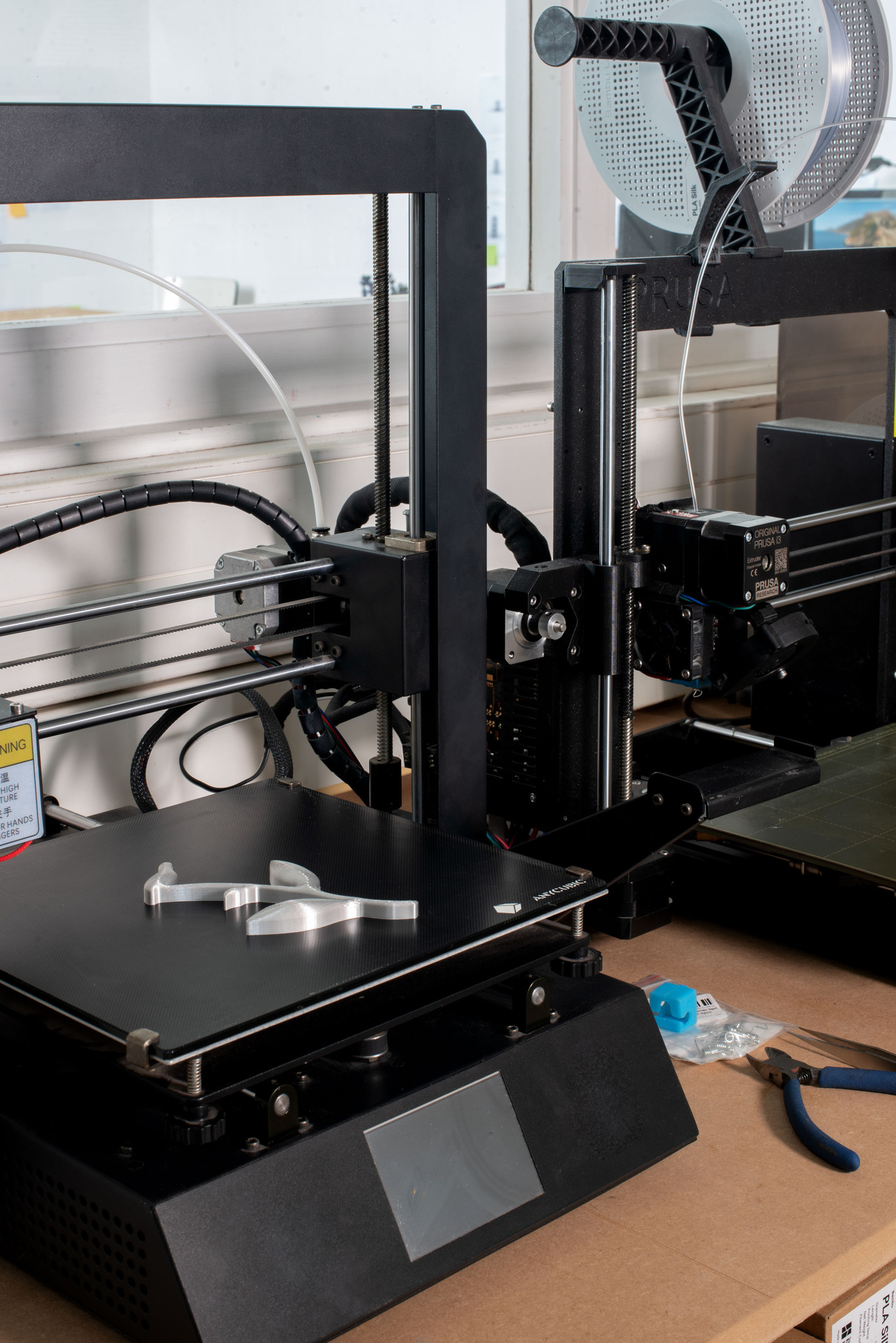
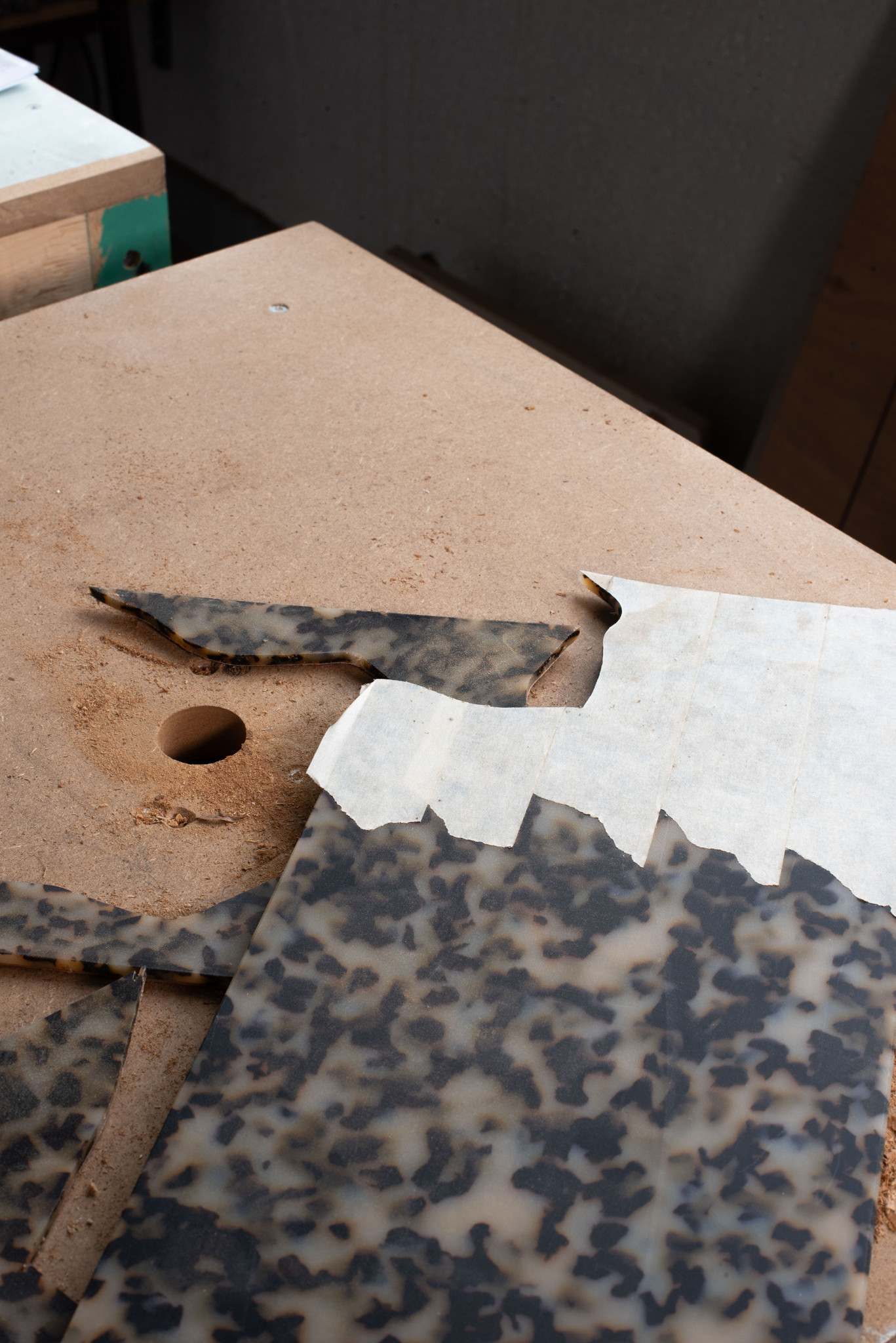
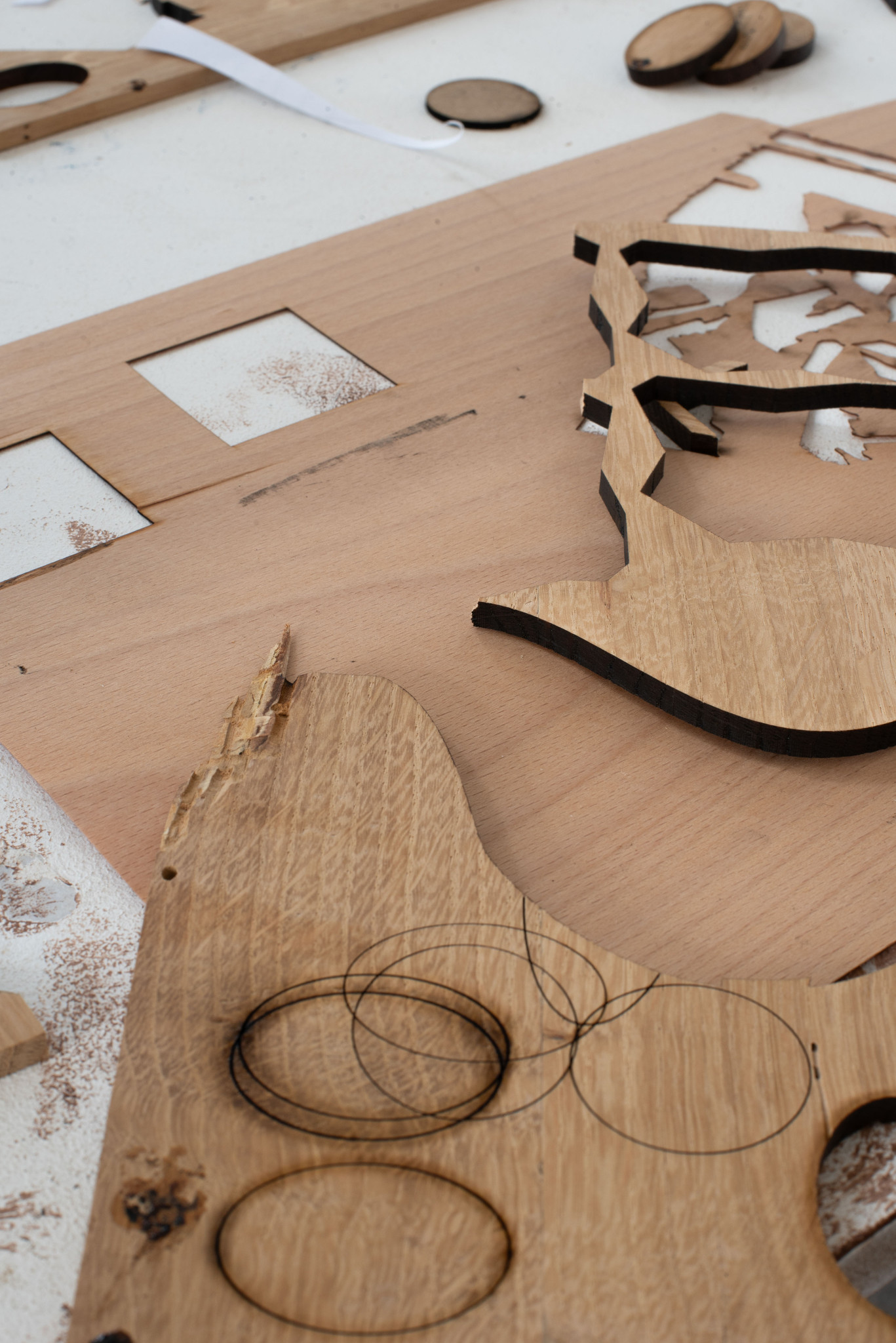
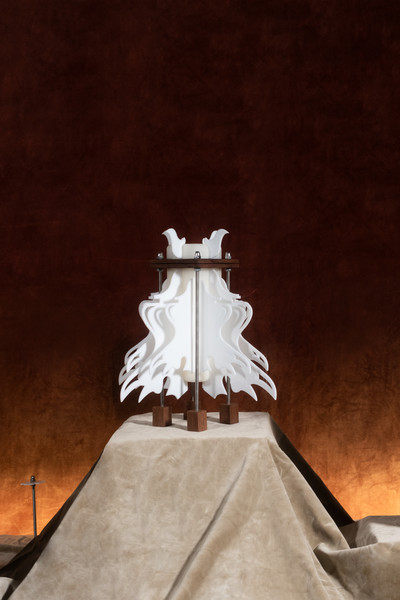
This assumed artificiality extends into objects that simulate functions without fully fulfilling them. The vases, for instance, do not hold living flowers, but at most artificial ones, asserting their status as autonomous decorative objects. Some incorporate secondary or contradictory functions, such as shelf brackets, blurring the hierarchy between use and representation. Others clearly dissociate structure from surface; as with the acetate vase, whose “skin” is held at a distance, accentuating the separation between perceived form and supposed function. The materials employed; aged oak, MDF, acetate, standardised industrial elements; are chosen as much for their symbolic weight as for their materiality. The oak wood, sourced from the former beams of the Sully barracks and over 200 years old, dialogs with contemporary technologies such as 3D printing, itself descended from ornamental logics inherited from the Renaissance.. This temporal crossover situates the objects within a historical continuum, in which past and present coexist without hierarchy. The series is built upon a play of contradictions held deliberately open: between function and décor, between industry and nature, between historical heritage and contemporary digital tools. Rather than resolving these tensions, the objects serve to make them visible.