Boris Cojean
ENSCi Les Ateliers
IG @boriscojean
Boris Cojean (France, 2000) is a designer based in Paris. Born in Saint-Malo and originally from Brittany, he graduated in Industrial Creation from ENSCi Les Ateliers (2025) and holds a degree in Communication from CELSA, Sorbonne Université (2024). Since 2022, he has worked alongside set designers and contributed to scenography projects, notably for fashion photography. He designs and self produces objects in his studio in Aubervilliers. Alongside this, he pursues a career in cinema as a production designer for fiction films. In 2025, he wrote and directed the short film L’Orchestre, currently in post-production.
La Maison Jaune
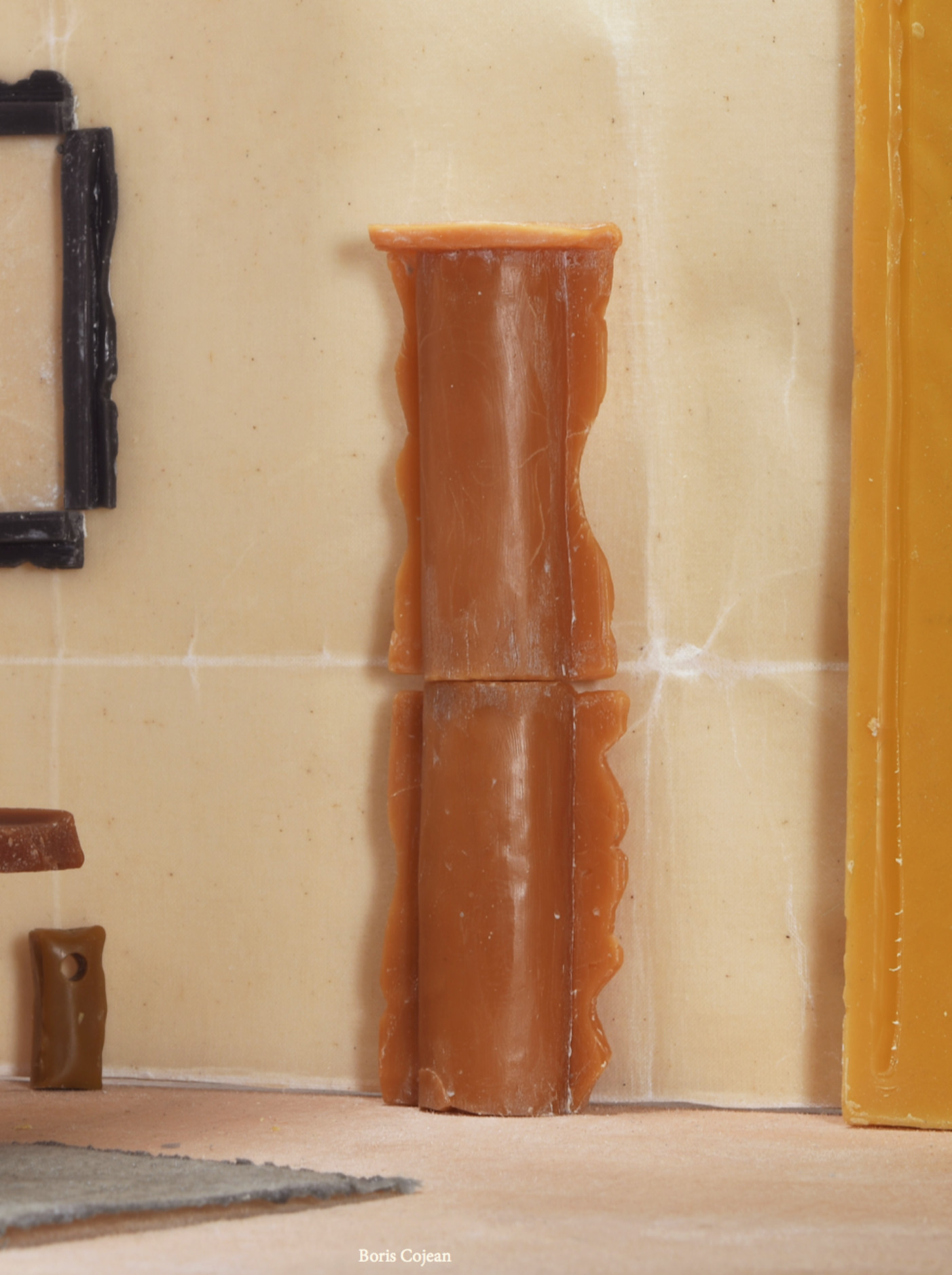
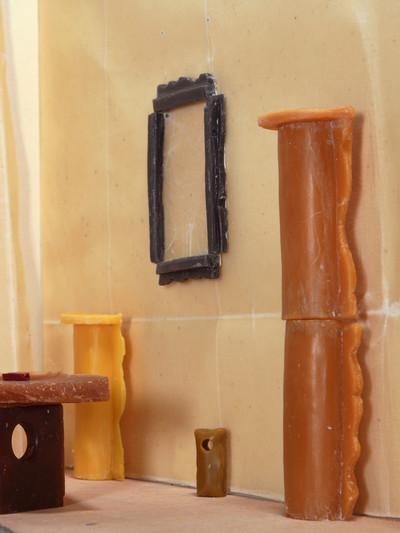
Step through the doorway of the Yellow House. Inside, a pervasive scent lingers, the furniture seems to ripple, and the colours are soft and chalky.At the centre of the modest room stand a single empty chair and a large table scattered with a few colourful objects. A wax vase filled with flowers, a plate awaiting its owner’s return. As in an unfinished painting, the space seems suspended in time. Who lives in this house of wax?
Slowly, the surfaces develop a patina, the blocks of material come alive beneath the Provençal sun, which awakens the fragrance of wax and gradually bleaches the yellows, ochres, and greens. A large yellow door seems to lead into an adjoining room. It remains closed. Let us leave this still life before we lose ourselves within it. The tall columns already seem to sway, perspectives become distorted, and the scent grows ever more enveloping.
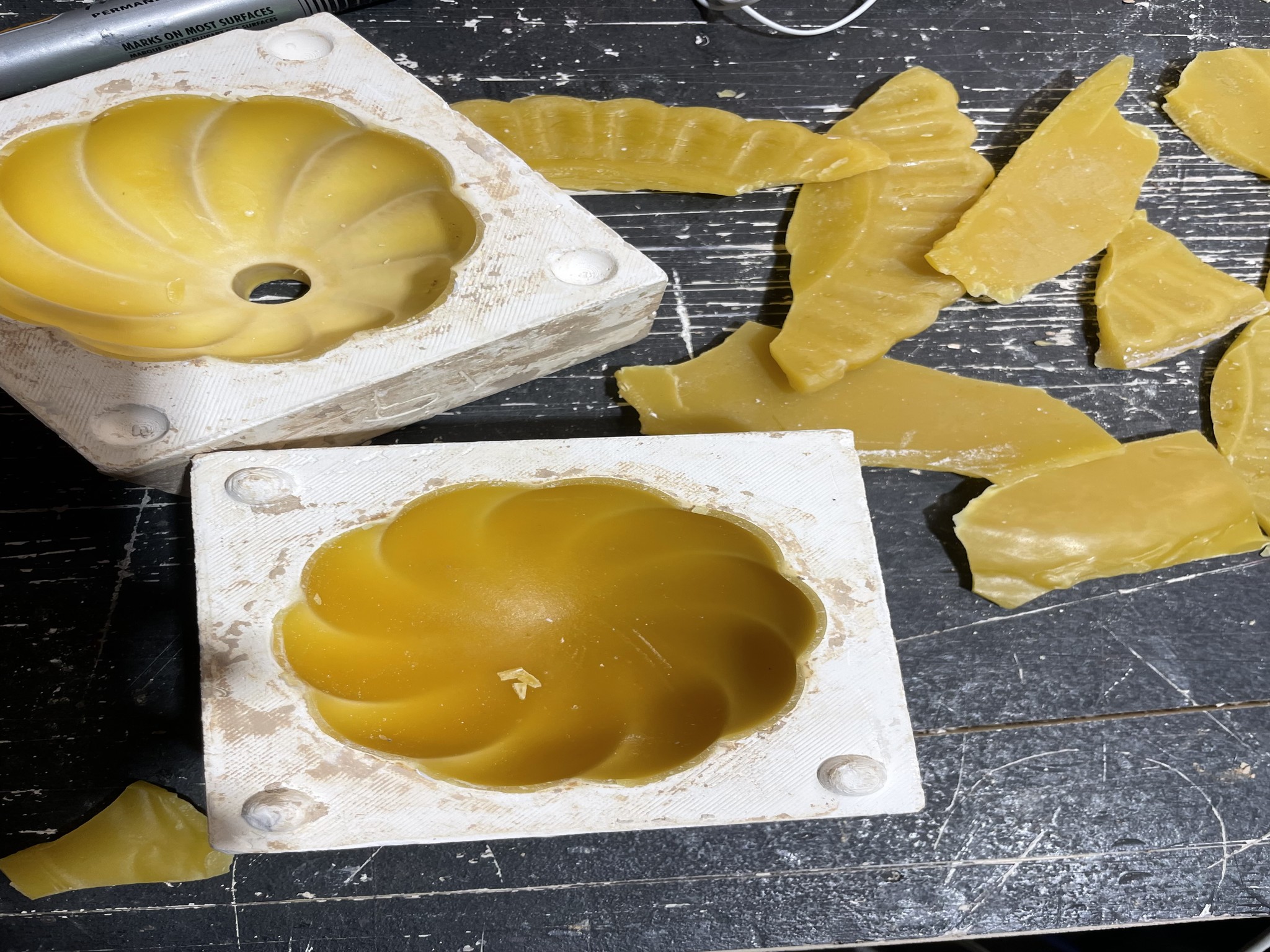
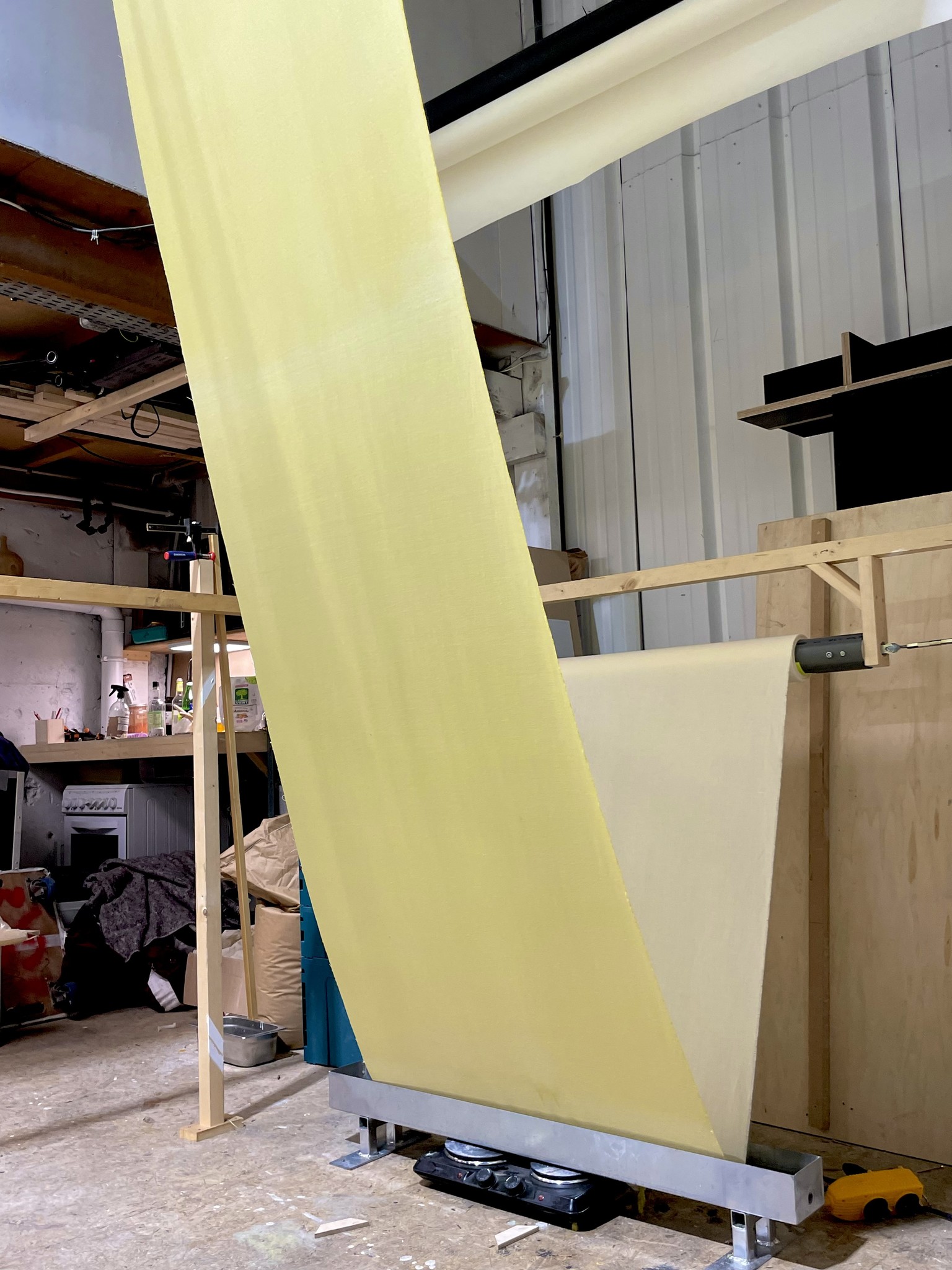
The Yellow House is a narrative interpretation of Provençal Impressionist painting, drawing in particular on the work of Vincent van Gogh around 1889. Wax is employed as a structural material, cast, applied in flat planes, and used as a textile coating. I imagine an ornamented room, a scene of daily life inspired by broad strokes of colour. Here, it is the traces left by moulding, the brushstrokes visible on coated surfaces, and the white fractures of waxed fabrics that create this blurred and vibrant quality.
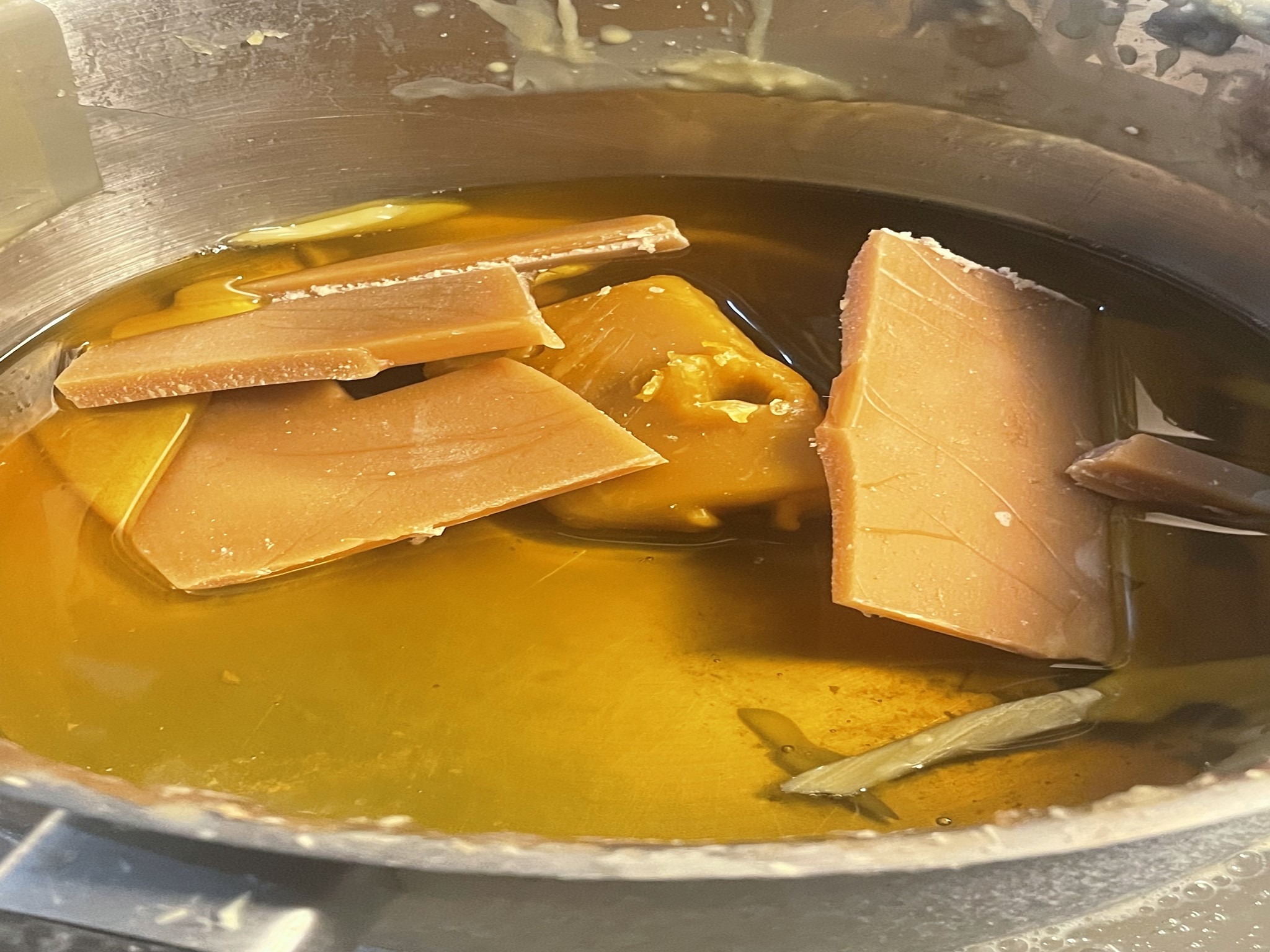
Wax is also chosen for its ephemeral nature and its cyclical capacity for transformation. The material develops a patina, deforms, and melts in order to give life to new objects. It is this unfixed and unfinished quality that inspires the scenography. Like a painting still in progress, the objects wait, suspended in time, and evolve gradually over the weeks.
WITH THE SUPPORT OF:
POTERIE RAVEL
ALLIANCE DU LIN ET DU CHANVRE EUROPÉENS
CIERGERIE DES PRÉMONTRÉS
MAKE’S CONCEPT STORE