Clément Pasquier
École de Condé
IG @clementpasquier_
Clément Pasquier has 3,428 drawings in his phone’s notes. Images, sketches, ideas that arrive at any time, anywhere, often for no reason. His work revolves around objects, spaces, and the way we use them. Each project begins with two questions: what is the context? What is the use? Form is never a starting point, but a consequence. At the intersection of the object, interior architecture and scenography: observe, analyse, understand, make necessary. He privileges precision over effect, real impact over image. His objects and furniture are born from drawing and making. Reuse, repurposing, unexpected materials, making mobile what was not, allowing coexistence of what did not cross paths. Every detail is justified. Ornament is not excluded: it is earned.
Temps Perdu
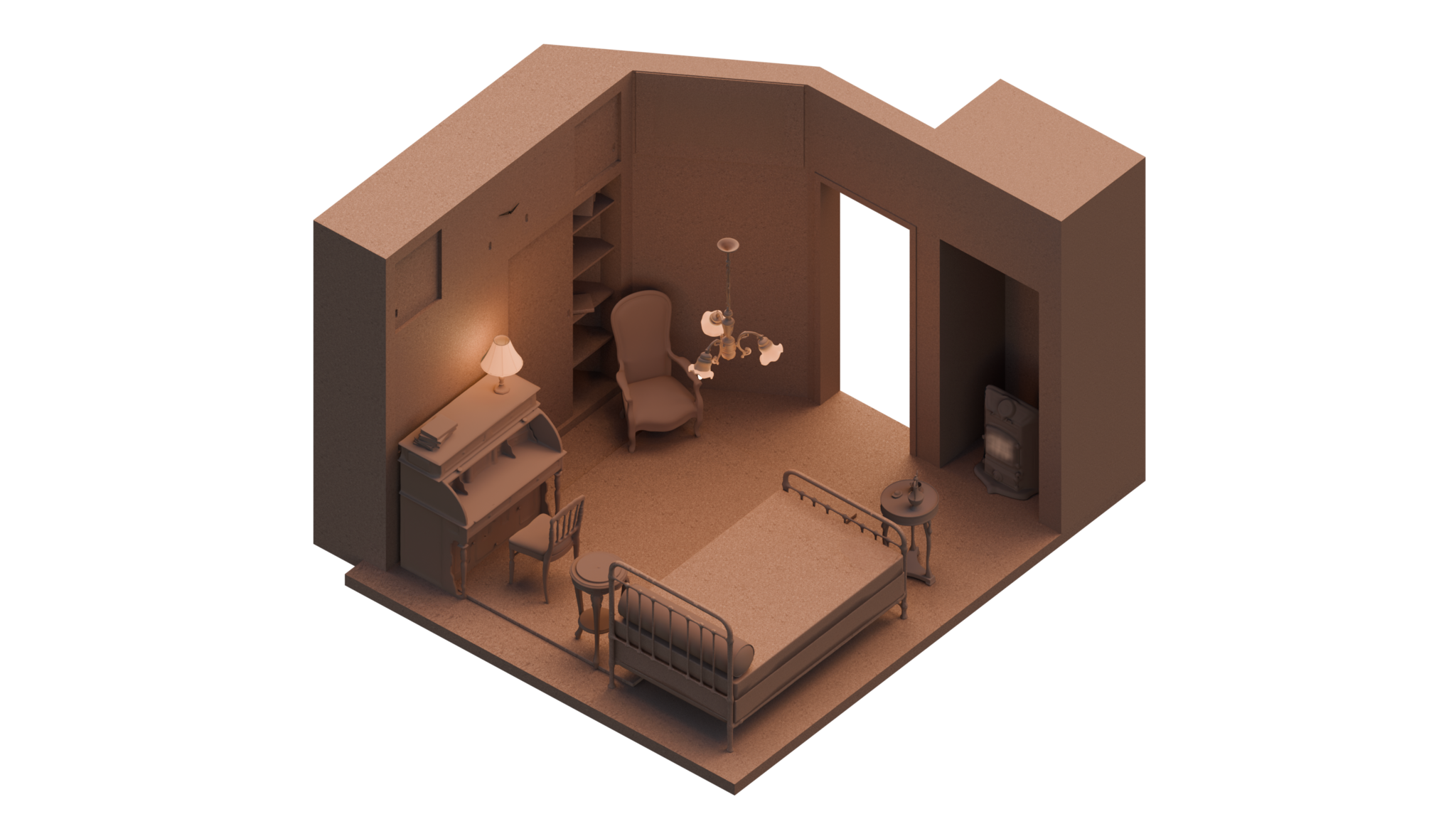
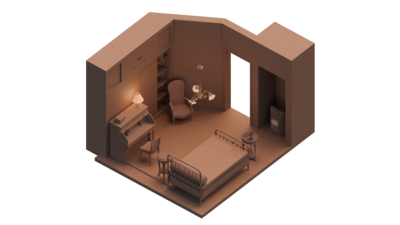
The Lost Time is an immersive installation inspired by Marcel Proust’s bedroom, the enclosed space where the writer lived, worked, ate, and wrote much of In Search of Lost Time. In his Paris apartment, Proust withdrew into this room as though it were a necessary, almost vital refuge. There, he found the conditions for a fertile stillness: a retreat from the world that made writing, contemplation, and creation possible.
Presented at villa Noailles, the installation brings Proust into a place he never visited, yet whose name was familiar to him. A close friend of Anna de Noailles, one of the leading literary figures of her time, Proust belonged to an intellectual and social milieu that resonates with that of the young couple Charles and Marie-Laure de Noailles. The installation thus creates a dialogue between two spaces: the enclosed room of a writer and a modern villa conceived as a place for art, life, and creation.
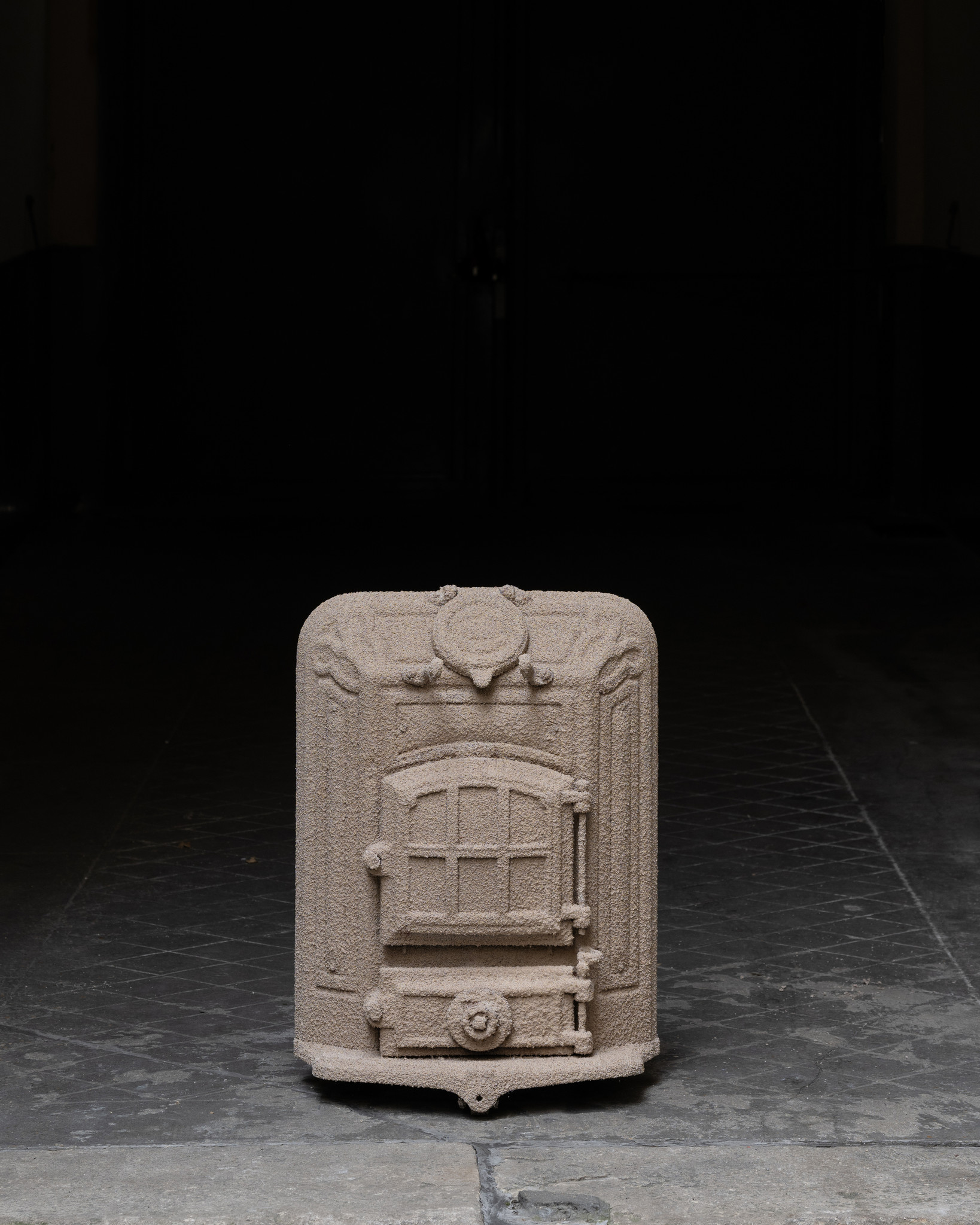
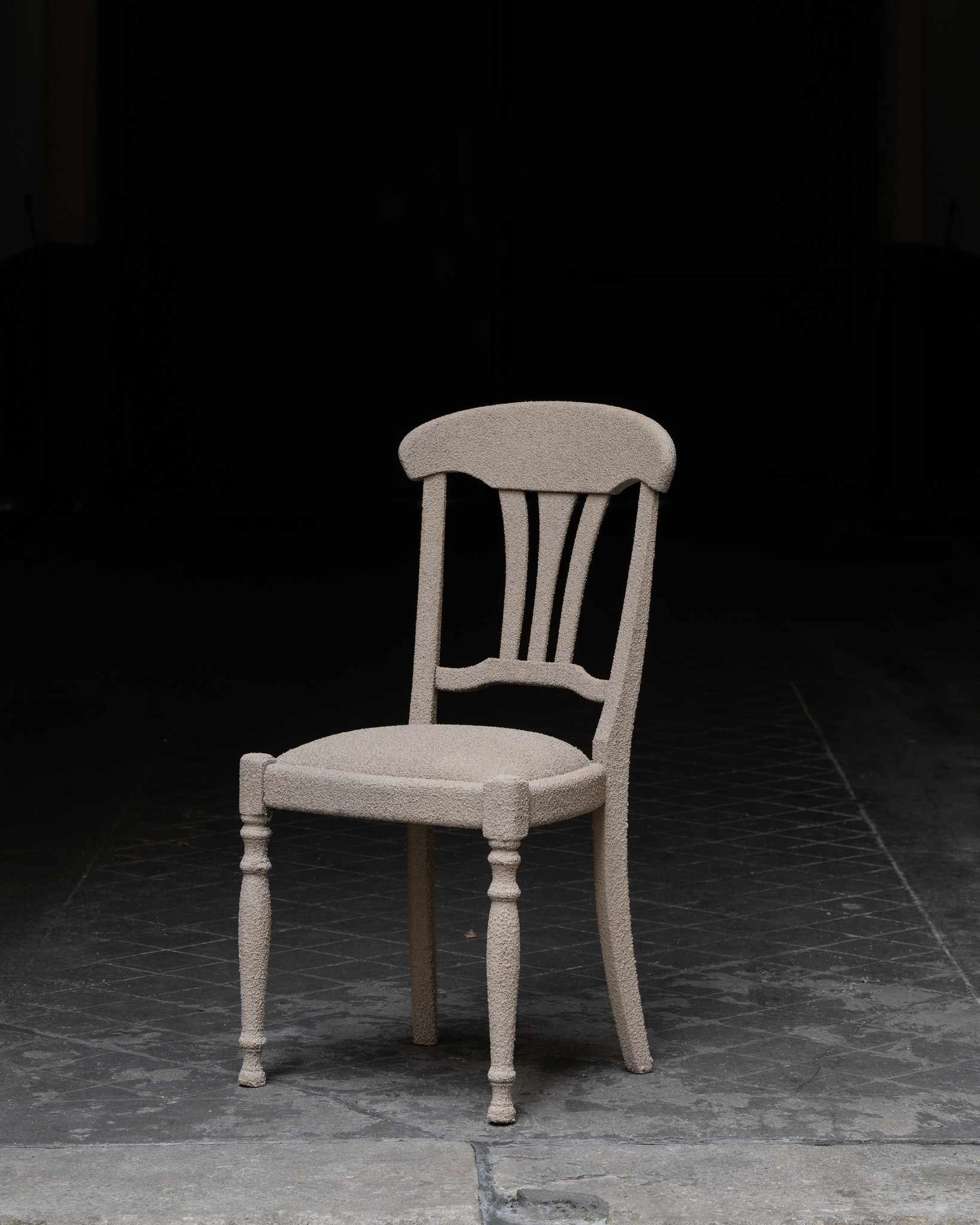
Proust had the walls of his bedroom lined with cork panels to shield himself from noise, cold, and the outside world. Here, this material becomes the starting point for an artistic gesture: symbolically removing the cork from that room and extending it across an entire space. Floors, walls, ceilings, furniture, objects, and accessories are enveloped in a single material made from cork, plaster, and alginate, developed from industrial cork-sawing waste.
Applied across every surface, this material freezes the room into a monochromatic continuum, dissolving the distinctions between architecture, furniture, and décor. Most of the elements are twentieth-century pieces of furniture—reclaimed, sourced from flea markets, or donated. A bed, desk, seating, and domestic objects echo the typologies of Proust’s bedroom. Covered in the same material, they become fragments of a mental landscape.
The only pieces designed specifically for the installation are the wall sconces. They reinterpret, in negative, the design of Robert Mallet-Stevens’ wall lights found throughout villa Noailles. Made movable and covered in cork, they reveal, through backlighting, the delicate texture and grain of the material.
The installation offers a fully immersive sensory experience. The lighting is subdued, contrasts are softened, sounds are absorbed, and visual and tactile reference points become blurred. A vegetal fragrance has been created around the scent of the cork oak, accompanied by notes of madeleine cake and herbal infusion—subtle allusions to Proust’s literary universe.
The Lost Time unfolds as a silent, enveloping, and almost unreal space in which time itself appears to slow down. The room becomes at once a bedroom, a study, a psychological landscape, and a material embodiment of memory: a place where stillness, far from signifying the absence of movement, becomes the very condition through which sensations emerge.
WITH THE SUPPORT OF
ALLIANCE DU LIN ET DU CHANVRE EUROPÉENS
CODIMAT COLLECTION - CARPET SOCIETY
SOLIEGE
CAROLE CALVEZ PARFUMEUSE
ET DESIGNER OLFACTIF