Palmarès
Tin Ayala
EQUATEUR ECUADOR
Huacos
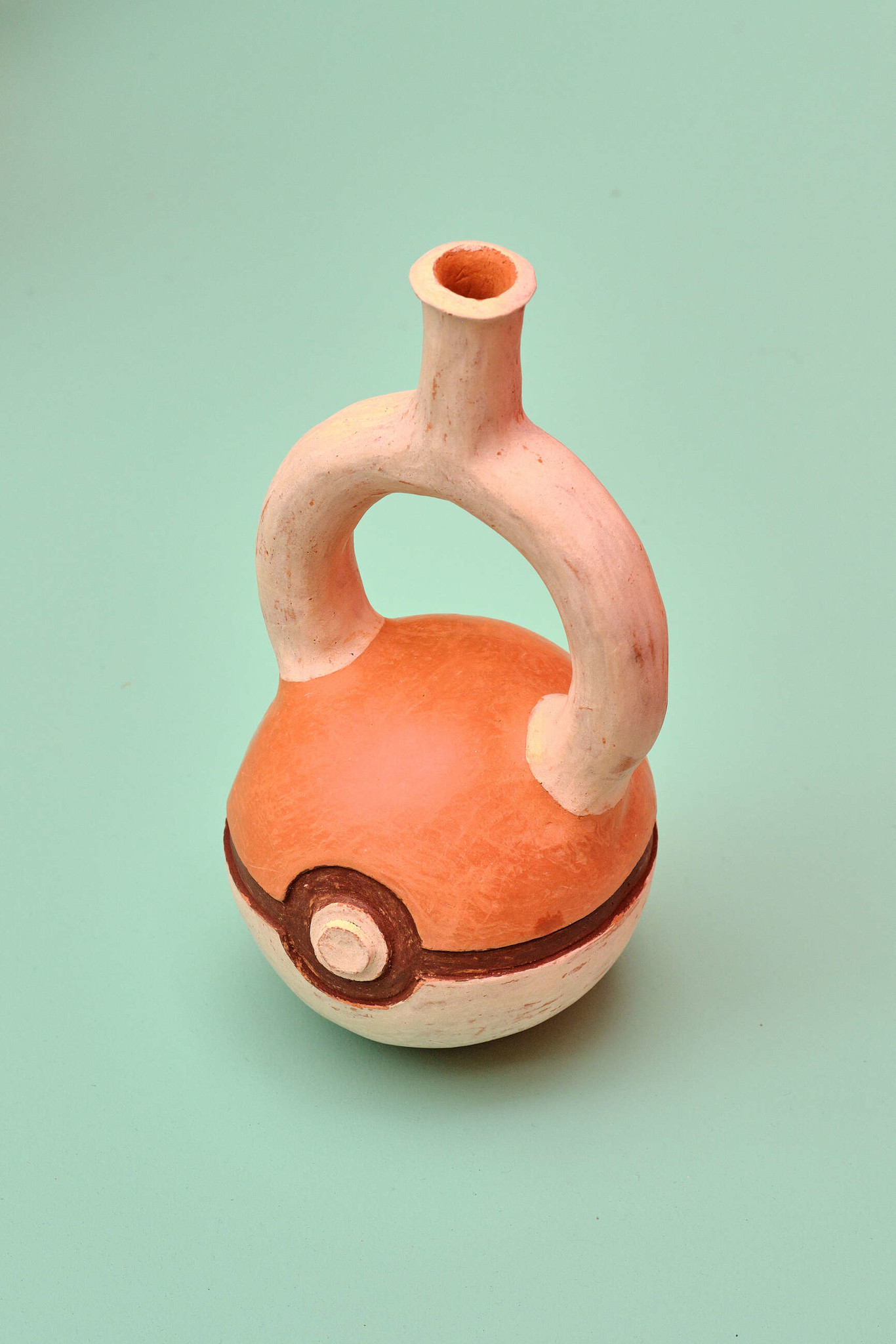
Huacos transforms precolonial Andean ceramics into objects of transculturation and cultural tension. Produced in different regions of the Andes before Spanish colonization, these ceramics, created by societies such as the Moche, Nazca, Chimú, and Inca, bear witness to complex relationships between humans, territories, and non-human entities.
In 2023, a research residency at the Larco Archaeological Museum in Lima provided access to one of the most significant collections of precolonial Andean ceramics.
This context made it possible to observe how these objects materialize a way of inhabiting the world grounded in reciprocity and interdependence with the environment.
Rather than attempting to restore an idealized precolonial past, the project explores possible continuities and cultural superimpositions emerging from the colonial historical rupture.
Within this framework, ceramics operate as sites of translation between different temporalities. The project consists of a series of speculative archaeological bottles that place ancient huacos in dialogue with contemporary pop culture. This encounter reveals how ancestral and globalized imaginaries, often conceived as opposites, can coexist and interact.
Through these hybridizations, the work questions colonial binarisms such as ancestral and contemporary, local and global, or nature and culture. The objects thus function as sites of tension and cultural abigarramiento, where heterogeneous temporalities and epistemologies overlap.
The project was developed during the Fondation d’entreprise Martell residency in Cognac between November 2025 and January 2026.
WITH THE SUPPORT OF
FONDATION D’ENTREPRISE MARTELL

Matisse Vrignaud & Lundja Medjoub
FRANCE
Les Horloges à Feu
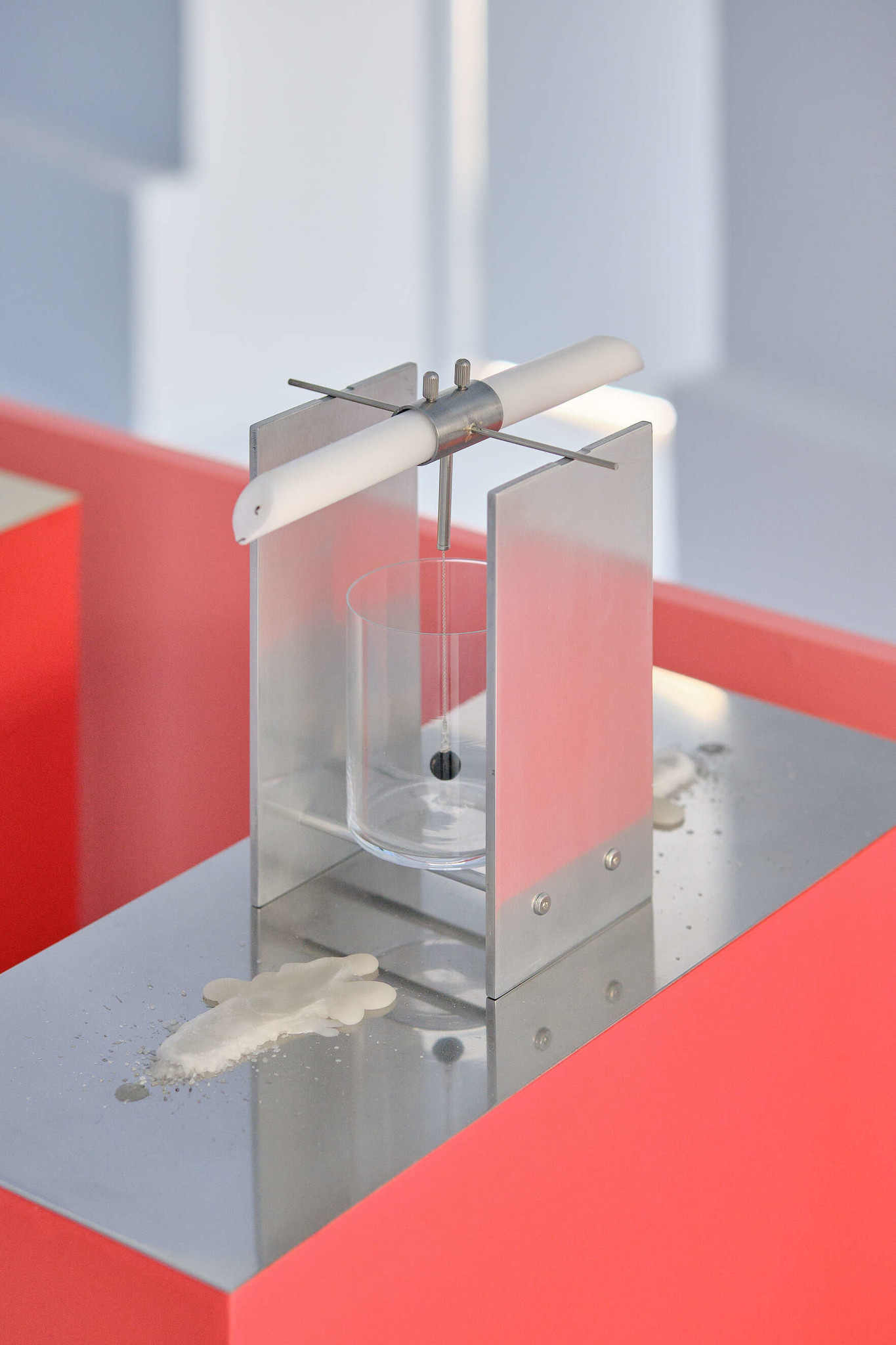
A contemporary reinterpretation of medieval measuring instruments, these candle clocks suggest a subjective and fluctuating perception of time. Here, combustion becomes movement, rhythm, and sound, revealing a moment that burns away and transforms.
This collection of acoustic objects uses flame as the principle for triggering sound. Here, fire does not measure time precisely; rather, it makes it perceptible, tangible, and unstable. These are clocks in which accuracy matters less than the experience: not instruments of measurement, but objects of contemplation, surprise, and meditation. Time is not counted here, it is lived.
Made from surplus parts from a brass foundry, each clock embodies a principle of timekeeping. The Gong traps marbles and chains in the wax of two vertical candles: as they burn down, the candles release them into a resonant bowl and against a thin cymbal, producing sounds with unpredictable timing. The Metronome is a pendulum formed by two candles fixed backto- back: the imbalance in combustion between the two flames sets the system in oscillation, and with each beat, a ball strikes a receptacle placed at the center. Finally, the Hourglass consists of a horizontal candle that heats a brass plate until the water placed on its surface begins to simmer and then evaporate.
WITH THE SUPPORT OF
MARCO ROY, ARTISAN BRONZIER
Eduardo Altamirano
MEXIQUE MEXICO
Sonido Material
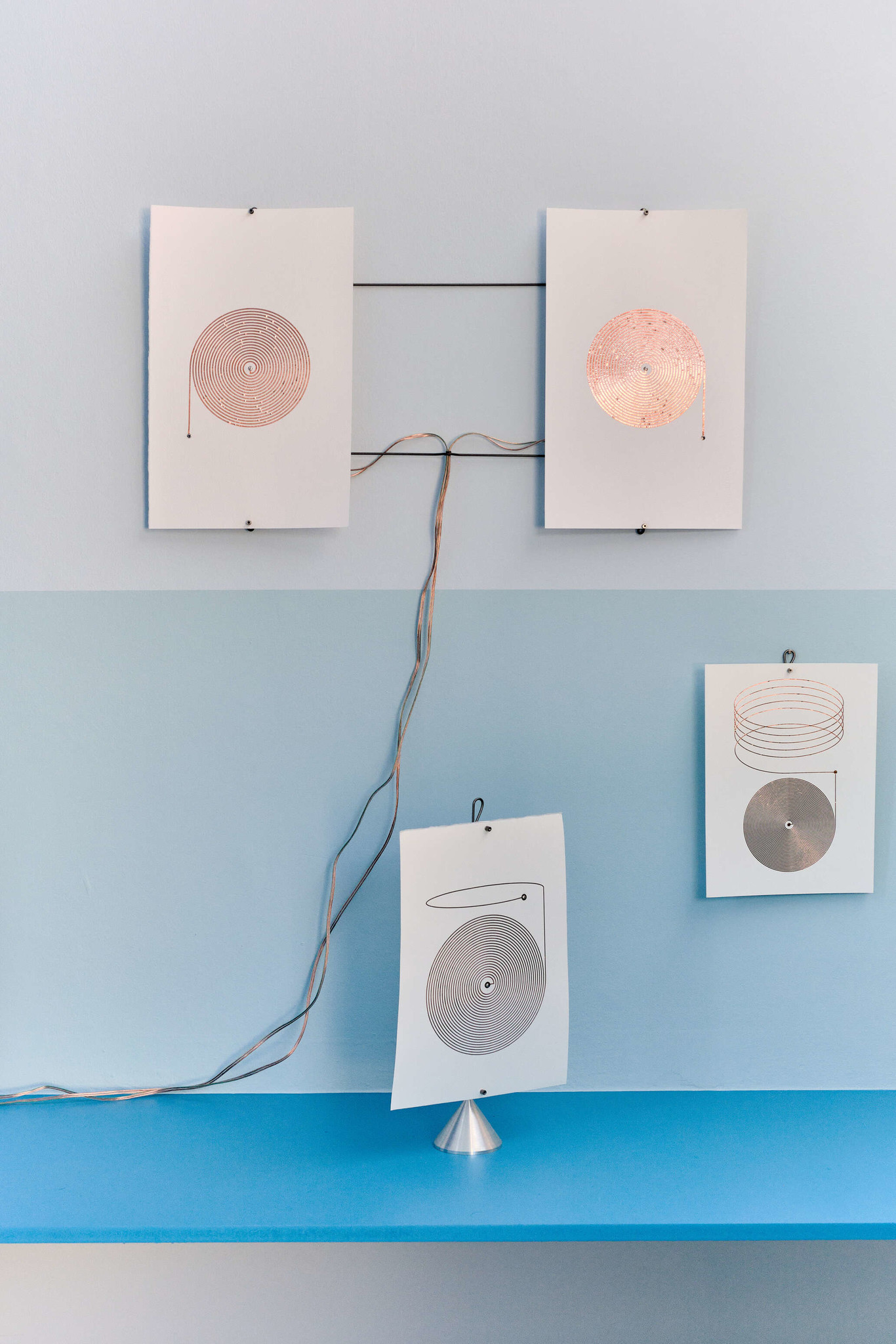
Sonido Material explores sound as a physical and spatial phenomenon rather than a contained technological output.
By dismantling the loudspeaker into its most essential components, the project questions the conventional boundaries between object, material, and sound.
Through the act of reduction, the product is composed of a self-made audio driver made with a coil, a magnet, and a paper membrane, allowing sound to emerge almost imperceptibly from matter itself. This approach shifts the loudspeaker away from its archetypal form and reframes it as an open system - one that reveals its function through presence, vibration, and material behavior.
The project proposes speculative loudspeaker typologies that blur the line between product and installation, emphasizing sound as something that occupies space, activates material, and challenges the visual dominance of audio equipment.
Rather than pursuing optimization or performance, Sonido Material positions sound as a tangible experience, inviting a more sensitive and intuitive relationship between technology, humans and space.